
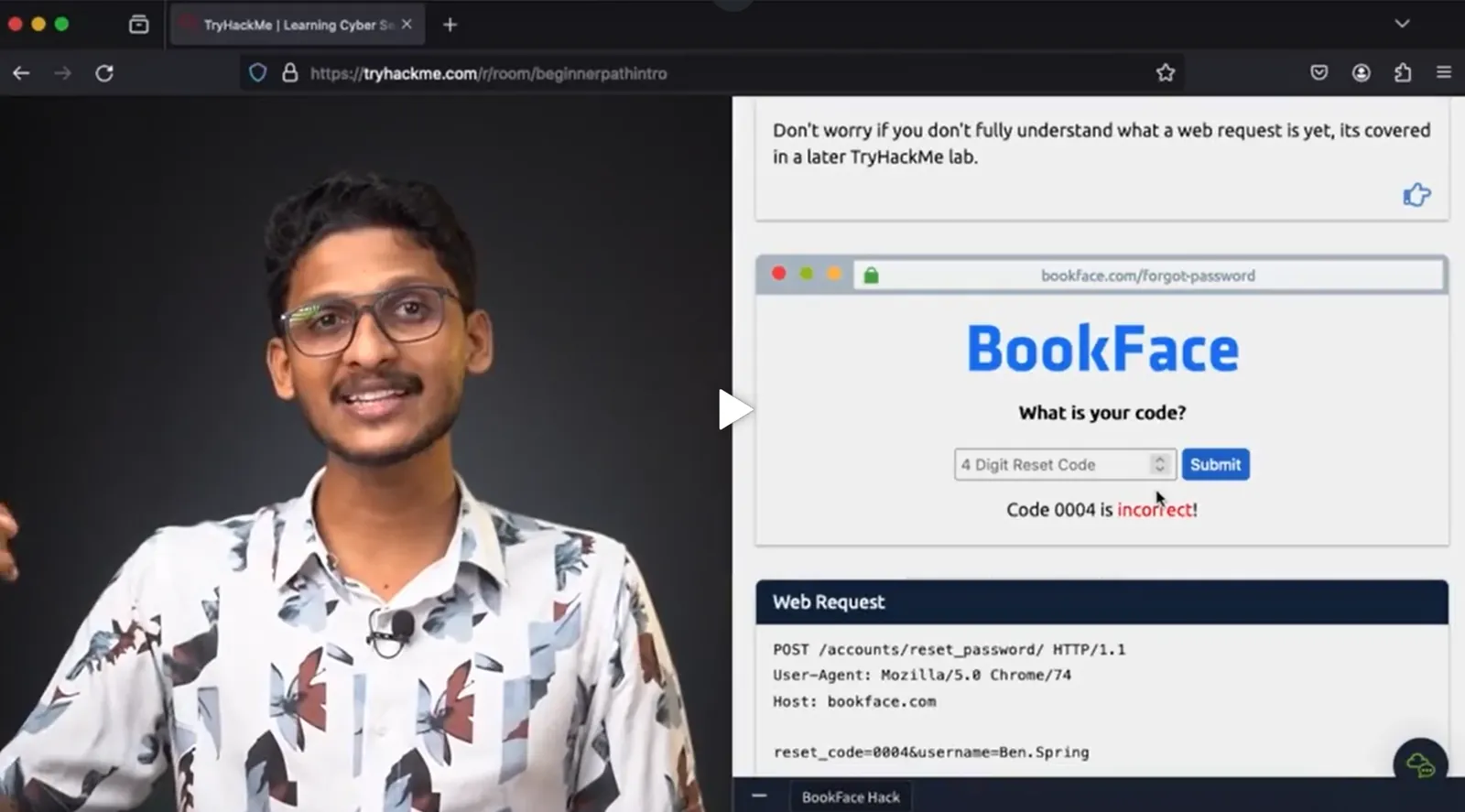
A degree alone isn't enough, and neither is a pile of certificates. In 2026 companies want to know how many labs you've done and what you can actually show. Two freshers can walk in with the same CEH certificate; the one who can open a laptop and walk through a lab they solved is the one who gets the job.
What to put in your portfolio
- Practice platform profile Your TryHackMe or Hack The Box profile, with your rank and the rooms or machines you've completed.
- Lab write-ups Short posts explaining how you solved a lab: what you found, the tools you used and what you'd do differently.
- Projects Your own home lab, a small script that automates a scan, or a detection rule you wrote and tested.
- Bugs you've found Only from bug bounty programmes or targets you had permission to test, reported the way the programme asks.
- A learning blog Notes on what you're learning each week. It shows how you think, not just what you've passed.
- Your certification CEH v13 or similar, so HR filters don't drop your resume before anyone sees the rest.
Certificate vs portfolio
Certificate: the entry pass
- Gets your resume past HR filters
- Proves you covered the syllabus
- Many other applicants have it too
Portfolio: the visa
- Shows what you can actually do
- Gives the interviewer something to ask about
- Unique to you
How to build one in three steps
- Practise every day. At least an hour of practical labs a day on TryHackMe, Hack The Box or your own home lab. Consistency matters more than long weekend sessions.
- Write up each lab. A short post on a free blog, GitHub or LinkedIn: the goal, your steps, what worked and what you learned. If you're more comfortable in Malayalam, write in Malayalam.
- Put it where recruiters look. Link your blog and platform profile at the top of your resume and on LinkedIn. In the interview, offer to walk through one lab.
Stay on the right side of the rules
- Only test what you're allowed to. Practice platforms, your own lab, or bug bounty programmes within their stated scope. Testing anything else is illegal in India, however good your intentions.
- Follow each platform's write-up rules. Hack The Box, for example, doesn't allow public write-ups of active machines; wait until a machine is retired.
- Never publish real data. No passwords, personal details or company information in your write-ups, even from a legal test.
The full rules every ethical hacker follows are in our ethical hacker roadmap for Kerala.
Three things to start today
- Start learning networking. Everything else in cybersecurity builds on it.
- Aim for one certification. CEH v13, Security+ or eJPT; if you're a beginner in India, CEH is the better choice. See how they compare.
- Do at least an hour of practical labs a day, and write up what you learn.
Your first portfolio pieces
50 Days Ethical Hacking Challenge
Fifty days of hands-on labs in networking, Linux and ethical hacking, explained in Malayalam. Finish it with labs you can write up and show.
Keep reading
Frequently asked questions
Do freshers need a portfolio for cybersecurity jobs?
Yes. A certification gets your resume shortlisted, but a portfolio of labs, projects and write-ups is what sets you apart in the interview.
What should a cybersecurity portfolio include?
Your TryHackMe or Hack The Box profile, lab write-ups, small projects, any bugs found legally through bug bounty programmes, a learning blog and your certification.
Is a certificate or a portfolio more important?
You need both. The certificate is the entry pass that gets you past HR filters; the portfolio is what proves you can do the work.
Where should I publish my lab write-ups?
A free blog, GitHub or LinkedIn all work. Follow each platform's rules: Hack The Box, for example, only allows public write-ups of retired machines.